When we started producing vertical short drama with AI, the first versions felt wrong in a way that was hard to name. The images were fine. The voices were fine. The episodes still felt slow.
So instead of guessing, we did the boring thing: we sat down with hit vertical dramas — the kind topping the short-drama apps — and counted cuts with a stopwatch.
What the measurements said
Three findings repeated across everything we measured:
- 25–30 cuts per minute. That's an average shot length near two seconds. For comparison, modern feature films average around 4–6 seconds per shot. Vertical drama runs at roughly double that pace.
- Hard cuts, essentially 100%. No dissolves, no wipes, no fancy transitions. The grammar is: cut, cut, cut. Any transition longer than a frame reads as hesitation on a phone screen.
- Dialogue carries everything. Cuts land on lines and reactions — speak, cut to reaction, cut back. Scenery breaths that a TV drama would allow simply don't exist. If nobody is talking or reacting, the shot is usually gone.
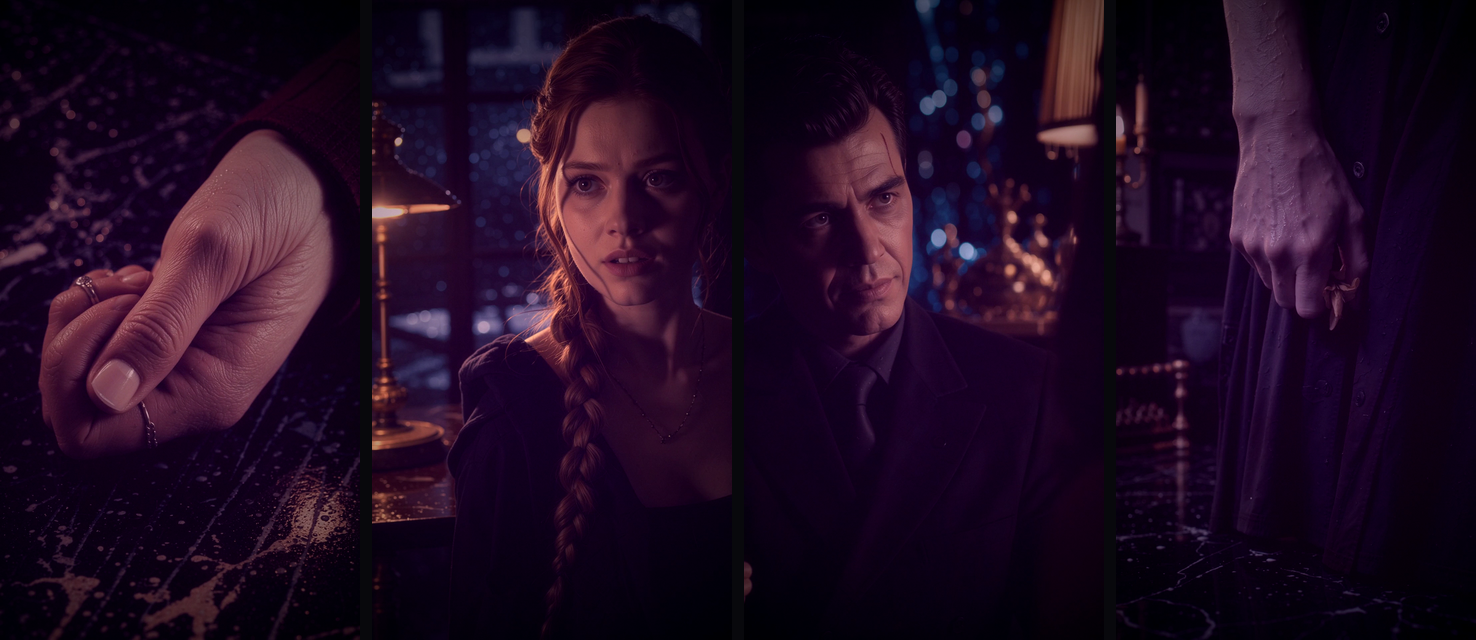
The counterintuitive part: a beautiful four-second shot performs worse than two ordinary two-second shots. Pacing beats polish. Viewers on a phone decide in seconds whether something is dragging, and "dragging" starts around the third second of any single image.
Turning numbers into pipeline defaults
A measurement is only useful if the production system enforces it. We baked the grammar into the pipeline as defaults, not guidelines:
- Shot breakdown targets ~2-second beats. When a script scene gets decomposed into shots, the planner splits action and dialogue into beats sized for the measured rhythm — a 60-second scene should come out as roughly 25–30 shots, not 12.
- Hard cuts are the only default. The edit assembler simply concatenates. Transitions exist as an explicit, rarely-used override rather than a temptation.
- Every shot must justify itself with a line or a reaction. Shots that carry neither get flagged during breakdown, before anything is generated — the cheapest possible place to kill a slow moment.
We ran a full five-episode romance series through these defaults (an enemies-to-lovers contract marriage story — yes, we know, the genre exists because it works). The difference against our early slow drafts was immediate and embarrassing: same story, same art quality, completely different watchability.
Why this matters for AI production specifically
Hand editors internalize pacing over years. An AI pipeline has no instincts — it has defaults. That's usually framed as a weakness, but it inverts nicely: once the right grammar is measured, the pipeline applies it with perfect consistency across every episode, every series, at batch scale. Episode 47 keeps exactly the discipline of episode 1.
The craft moves up a level: instead of cutting each scene by hand, you decide the grammar once and then direct — reviewing output, rejecting takes, adjusting the spec when a genre demands it.
You can judge the results yourself — the series produced under this grammar are free to start at owntent.com/watch. And if you want to direct your own with these defaults already in place, start at owntent.com.