In part one we showed, invoice in hand, that the same Seedance 2.0 cut costs up to 2x depending on the route. With Seedance 2.5 the spread got wider — and for the first time, the source (ByteDance) sells official tokens directly. We buy those tokens. This post is the August 2026 numbers, plus the structural reason owntent credits sit at the bottom of the market.
The reference cut
Seedance 2.5, 5 seconds, 720p, one image-to-video pass — the standard short-drama setup. Source billing is token-metered: consumption depends on resolution, length, and input mode (text-only vs image/video references), and video-reference mode bills at a lower rate. Our exact purchase terms are part of our contract, so they are not printed here — the comparison below uses what users actually pay.
Same cut, every service (measured 2026-08-19)
| Service | One 5s cut | Notes |
|---|---|---|
| owntent hosted credits | $1.20–1.56 | by pack tier, usage-settled |
| P*** API | ~$1.58 | per-second billing |
| H*** ($49 plan) | ~$1.63 | flat credits, every mode |
| D*** (entry plan) | ~$2.23 | from 296 credits / 8s |
| f*** API | ~$2.37 | official partner rate |
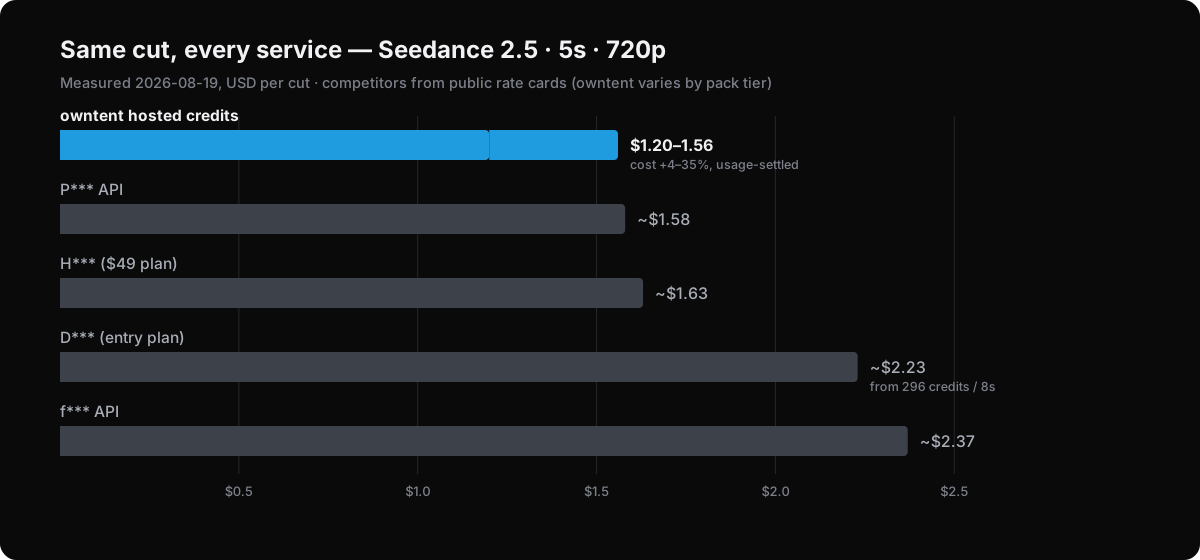
D*** — the source's own consumer app — is worth a look. In part one, consumer subscriptions undercut every API; with 2.5 the same settings draw more than twice the credits, so on the entry plan it now costs more than the APIs (its advertised best-case annual rate is lower, but that rate is manual web-UI only — useless for batch-producing episodes).
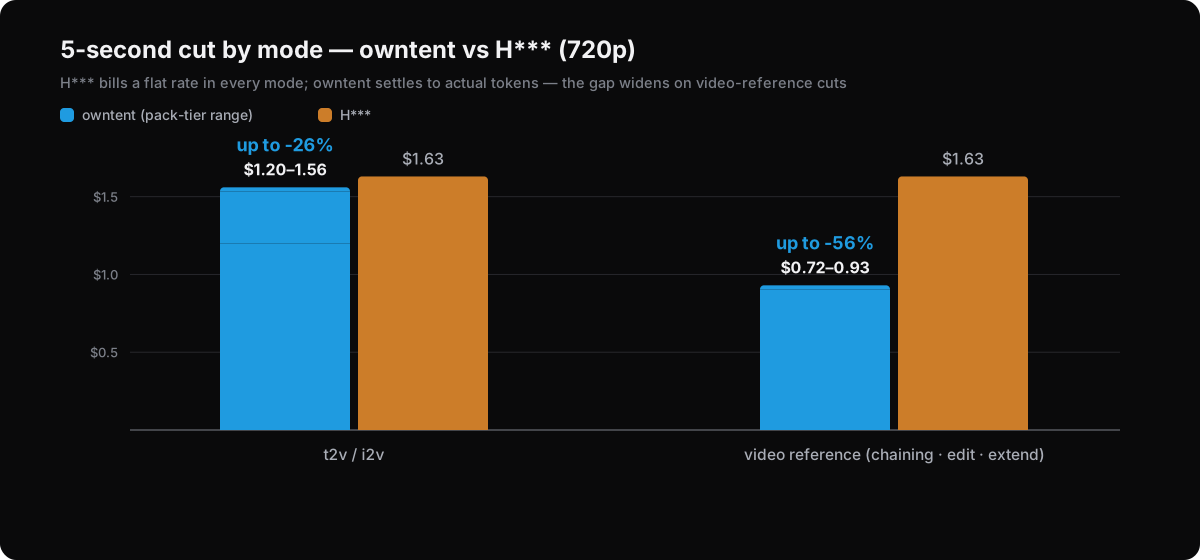
Where the gap really opens is cuts that use a video reference (clip chaining, video edit, extension). Source billing gets cheaper in this mode, while flat-credit services charge the same in every mode. Because owntent settles to actual tokens, that discount passes straight through to the user price — the same cut lands up to 56% under H*. Even on plain t2v/i2v we land up to 26% under. (One exception: 1080p t2v is currently cheaper on H***'s promotional rate. The pixel math says that rate won't last, but until it normalizes, routing only final 1080p masters there is a rational split.)
Why services differ by 2x
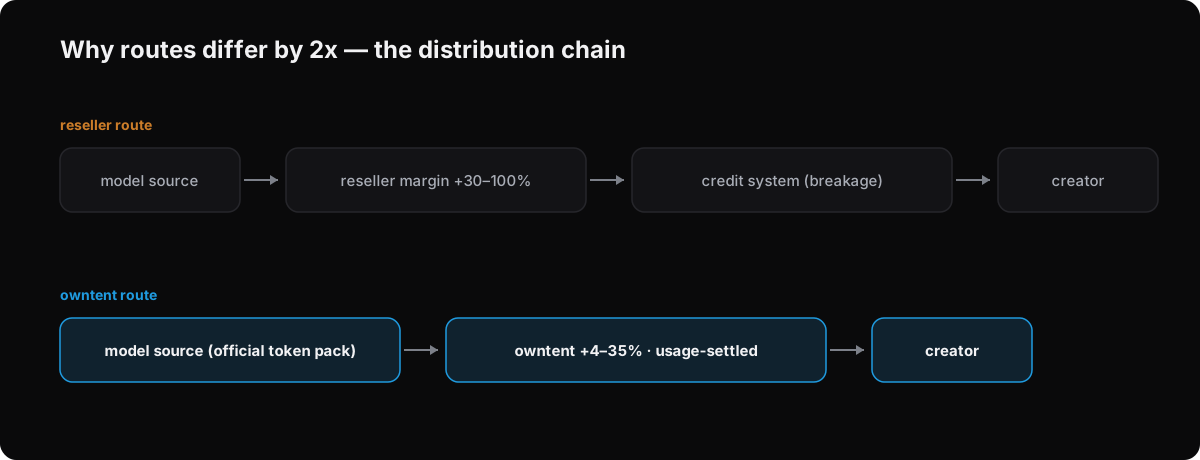
Every service in the table sells the same weights and the same output. The entire difference is distribution margin: resellers buy API access at cost, add 30–100%, and credit systems earn once more on breakage. As we wrote in part one — if your tool is welded to one provider, you pay that spread without ever seeing it.
We went the other way: opened an account at the source, prepaid the official token packs, and wired the app's Seedance 2.5 lane straight into it. No middle layer, so there is no margin to pass along.
Three mechanisms that pin owntent credits to cost
1. Direct-to-source procurement. Hosted Seedance 2.5 generations go to the source's official API, not a reseller. Our purchase price stays contractual, but the user prices in the table being a thin layer above it is verifiable through the next two mechanisms.
2. Actual-usage settlement. Reference-video cuts vary with reference length, so most services bill the worst case flat. We settle each finished generation against the tokens the source actually reports and auto-refund the difference. You pay the invoice, not an estimate.
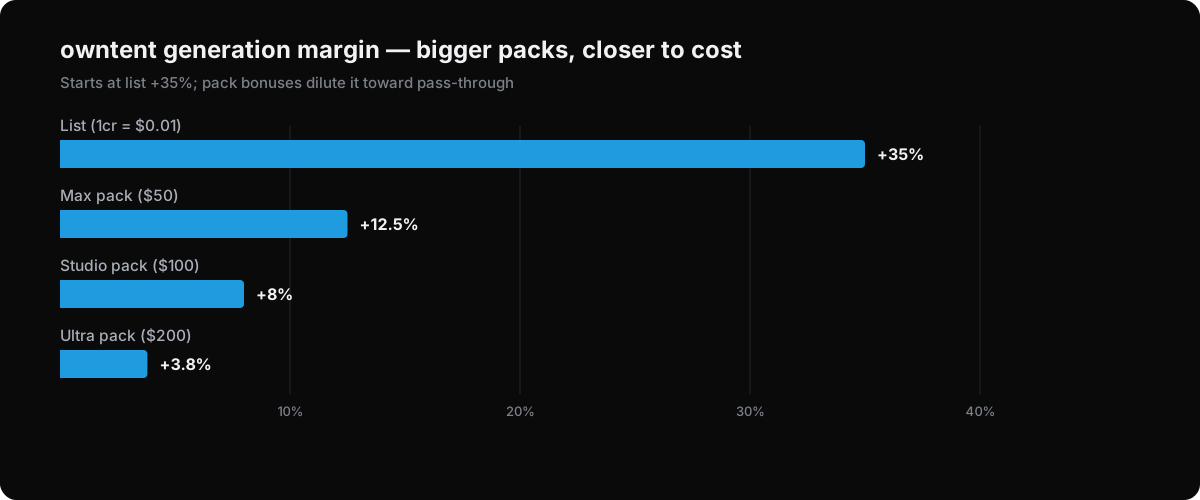
3. A published margin. At list price, our generation margin is cost +35%. Bonus packs dilute it — on the largest pack it drops to +4%, which after payment fees and failed-retry costs is effectively pass-through. And BYOK (your own API key) carries no margin at all: plug in your key and you pay provider cost.
Why we price this way — and whether it lasts
Our goal is not generation margin. It is more content. owntent is a pipeline for making and publishing episodes, and we win when a creator finishes one more season — not when one cut costs more. Halve the cut price and the same budget buys twice the takes, which shows up directly in finished quality and output. To us, generation cost is friction, not revenue, and friction should go to zero.
So the standing policy:
- Always route to the cheapest source. Today that is the source direct; when the market moves — price cuts, promotions, new providers — the routing moves, including per-segment (like 1080p today).
- BYOK and local-GPU paths stay free. You can run the entire pipeline without ever buying a credit.
- Pre-generation cost display and actual-usage settlement are a contract. You see the credits before running and get settled to measured usage after. No end-of-month surprises.
The cheapest cut is still the one you didn't accidentally regenerate — but the second cheapest is the one made without a middleman.
Competitor rates verified 2026-08-19 against each service's public rate card or in-app pricing, normalized to a 5-second 720p cut. Prices in this market move fast — read this as methodology, not gospel.